

El Paso and Juárez together form a freight market that generates consistent demand for dry van, reefer, and flatbed capacity year-round. Manufacturing components, consumer goods, fresh produce, and industrial materials all move through this corridor daily, and shippers on both sides need reliable carriers who know how this market operates. Cargobot works with those shippers directly. Register your trucks and when freight matches your equipment and your preferred lanes, our team contacts you before the load reaches anyone else.
What Cargobot brings to El Paso carriers
El Paso is not just a border crossing — it's a manufacturing hub. The Juárez maquiladora corridor produces components, finished goods, and consumer products that need to move north on dry van and flatbed equipment every day. Cargobot works with the manufacturers and logistics providers on both sides who need qualified U.S. carriers and want to establish recurring relationships rather than post to boards every time they have a load.
Cross-border freight out of El Paso involves multiple bridge options — Ysleta-Zaragoza, Bridge of the Americas, Stanton Street — each with different processing patterns and wait time profiles. Carriers who understand which bridge works best for which type of load have an operational edge. Cargobot works with shippers who know this market and connects them with carriers who do too.
El Paso's location on I-10 gives carriers here direct lane access to San Antonio, Houston, Phoenix, and Los Angeles. Shippers who use El Paso as their crossing of choice often need consistent capacity on those specific corridors. Cargobot matches carriers with freight that fits their natural lane preferences, not just whatever happens to be available on a board.
Get a quote for your freight
+74
YEARS IN BUSINESS
2
PRESENCE IN NORTH AMERICA & EUROPE
30,000+
PRE-SCREENED CARRIERS
500+
CLIENTS
5
YEARS RECOGNIZED AS TOP TECH STARTUP
Why Carriers Choose Cargobot for Freight Loads in El Paso
Key Features
- Access to Juárez manufacturing freight before the board — El Paso's freight market is driven by one of the largest maquiladora corridors on the border. Cargobot works with manufacturers and logistics providers on both sides who need U.S. carrier capacity on a recurring basis and want to establish direct relationships before posting publicly.
- Multiple bridge options, matched to the right loads — El Paso has three commercial crossings with different processing profiles. Carriers who understand which bridge works for which freight type move more efficiently. Cargobot matches loads to carriers who know the crossing that fits.
- Dry van and flatbed access to manufacturing output — Components, finished goods, and industrial materials from Juárez's manufacturing base move primarily on dry van and flatbed equipment. Cargobot connects carriers with that freight directly rather than leaving it to board competition.
- I-10 lane access in both directions — El Paso sits on I-10 with direct lane access to San Antonio and Houston to the east and Phoenix and Los Angeles to the west. Cargobot works with shippers whose freight flows on those corridors so El Paso carriers can build consistent round-trip operations.
- Reefer coverage for food and temperature-sensitive goods — Processed foods and temperature-sensitive ingredients from Chihuahua's food manufacturing sector also move through El Paso. Cargobot connects reefer carriers with those shippers alongside the dry van and flatbed volume.
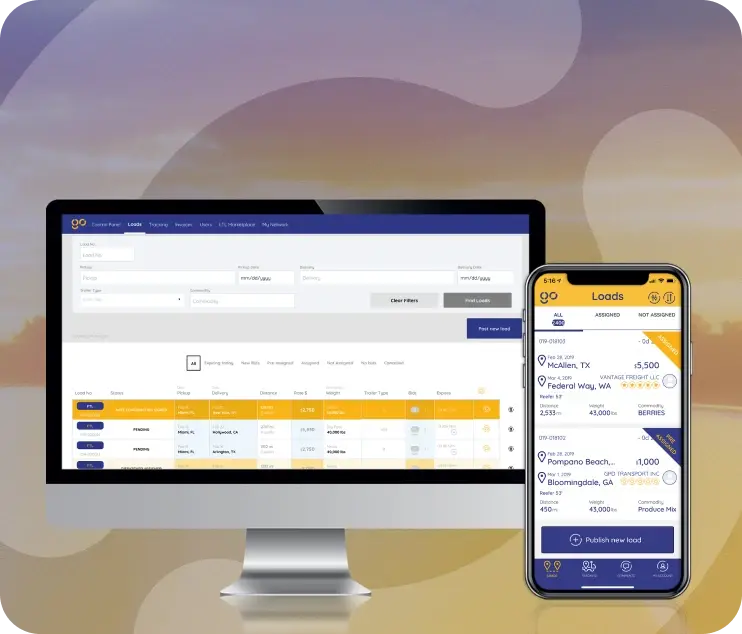
- Single operations contact for cross-border coordination — Customs documentation, drayage coordination, and load status management are handled by one Cargobot contact from pickup to delivery. Carriers don't manage multiple parties across both sides of the border.
- Recurring carrier relationships with shippers who plan ahead — El Paso shippers who work with Cargobot think in recurring lanes, not spot transactions. Carriers who perform consistently stay in the rotation for freight that fits their equipment and their corridors.
Who uses Cargobot PTL
Industries and roles

Logistics directors & transportation managers
- Consolidate partial truckload shipments with full route visibility and proactive control.
- Streamline operations while reducing freight spend on mid‑size loads.
- Ensure on‑time delivery windows and improve service performance across your network.

Importers/Exporters with high-volume lanes
- Flexible PTL capacity for mid‑scale or multi‑stop shipments.
- Connect directly with vetted, high‑performing carriers experienced in cross‑border PTL.
- Optimize freight across complex domestic and international supply chains.

Growing manufacturers and distributors
- Scalable PTL freight solutions to support seasonal demand and business expansion.
- Secure, on‑schedule delivery for inventory replenishment and production flow.
- Simplified logistics management with direct access to reliable carriers via our platform.

Agricultural producers & cold chain managers
- Temperature‑controlled PTL options for perishables and sensitive goods.
- Food‑grade compliant handling with certified carrier partnerships.
- Maintain product quality with specialized tracking from origin to destination.

Retailers with national warehouse networks
- Centralized PTL distribution connecting regional and national warehouse hubs.
- Real‑time inventory movement tracking and proactive restocking.
- Cost‑efficient PTL shipping for high‑velocity retail supply chains.
7 Steps to Simplified Freight
Post your lane
Set your route, timeline and target rate
1
Receive offers
From vetted carriers nationwide
2
Confirm & schedule
Get tracking updates, and documentation all-in-one platform
3
Bonus: A freight agent will assist you throughout the process, from quoting and booking to delivery and dispute resolution.
Talk to an expertWhat freight moves through El Paso?
Manufactured goods from Juárez's maquiladora corridor. Juárez is one of the largest manufacturing cities on the border, producing automotive parts, electronics, medical devices, and consumer goods for U.S. companies. This freight moves primarily on dry van equipment in high volumes daily.
Fresh produce and agricultural products from Chihuahua. Chihuahua is one of Mexico's largest agricultural states, producing apples, chiles, onions, and other commodities that cross at El Paso heading toward Texas and national distribution networks on reefer equipment.
Auto parts and aerospace components. El Paso's manufacturing ecosystem includes significant aerospace and automotive production tied to Juárez operations. These components move on tight JIT schedules that require carriers who can execute consistently without delays.
Flatbed freight including steel and industrial equipment. Steel products, industrial machinery, and construction materials move through El Paso on flatbed equipment for both northbound U.S. distribution and southbound movement into Mexican manufacturing operations.
Chosen by leading logistics managers throughout the U.S.

"Reliable to broker to work with! Communication is great, always there to help! Looking forward doing business with these guys!"
Alex Stellar Carriers
"I've been working with Cargobot for over 2 years. Rates are always super competitive, and the customer service is great. I would recommend them to anyone looking for a quality company to handle their freight needs."
Thomas Haught
"We have done multiple shipments with Cargobot and we are impressed with their excellent rates and professionalism. Daniela and her team are helpful every step of the way with the quoting, shipping, and tracking process. Ship with them with confidence!"
Nathan Moradi
"I have been using Cargobot for 8 months. They have an excellent team led by Daniela Lezcano! I have enjoyed the willingness of their IT team to allow me to weigh in on the customization of the tool. It is a one stop shopping tool for all your transportation needs."
Derek Nolen
"CARGOBOT is an epitome of true professionalism. We work with Derick and Laura and they both give a Five-star service. They follow each load from loading to delivery and each time it’s a smooth process. Rates are always lower than other companies and they are prompt to respond to any question. Working with them gives you a piece of mind. I will highly recommend them for any freight related matters."
International Golden Foods
Verified, compliant, secure


Real-world freight, real savings

National distributor automated carrier selection and reduced booking time by 50%.

Auto parts manufacturer scaled fleet capacity without hiring brokers.
Freight service coverage across key U.S. cities

Atlanta is a Southeast U.S. freight corridor, ideal for PTL ground shipping. Cargobot’s supply chain visibility, fast booking, secure transport, and flexible partial truckload options serve Atlanta’s major warehouse districts and logistics parks.
Chicago sits at America’s freight crossroads, perfect for PTL ground shipping through logistics parks and warehouse districts. Cargobot streamlines partial truckloads with flexible booking, supply chain visibility, dedicated agents, and minimal handling, keeping shipments secure and delivery times short.
Dallas is a Texas leader in logistics, with PTL solutions optimizing moves in large warehouse districts and freight corridors. Cargobot delivers partial truckload flexibility, supply chain transparency, secure booking, and dedicated local agents, supporting mid-sized shipments across Dallas’ top logistics zones.
Eagle Pass, TX, a key cross-border logistics zone, is perfect for PTL ground shipping. Cargobot offers supply chain transparency, secure and flexible transport, and rapid booking for partial truckload shipments in local warehouse districts.
El Paso bridges the U.S.-Mexico freight corridor, ideal for PTL partial truckloads. Cargobot provides tech-driven booking, supply chain visibility, secure transport, and flexible options through border warehouse districts and logistics parks.
Houston, with its vast logistics parks, thrives as a PTL powerhouse. Cargobot ensures tech-enabled booking, real-time supply chain visibility, and secure transport for mid-sized shipments, making ground freight shipping efficient and flexible throughout Houston’s industrial zones and warehouse districts.
Laredo’s trade bridges make it vital for PTL and cross-border partial truckloads. Cargobot offers swift supply chain visibility, secure and flexible PTL booking, and direct transport for shipments in key warehouse districts and freight corridors.
Los Angeles anchors a West Coast freight corridor, ideal for PTL trucking through expansive logistics parks and warehouse districts. Cargobot offers technology-backed, direct shipping for partial loads, supply chain visibility, flexible booking, and dedicated agent support for secure, damage-minimized freight across LA’s busiest industrial zones.
McAllen’s dynamic logistics zone is a gateway for PTL ground freight shipping. Cargobot delivers efficient, secure partial truckload transport, dedicated service, supply chain visibility, and rapid bookings through major warehouse districts and freight corridors.
Memphis, TN, is a central freight corridor where PTL shipping supports warehouse districts and logistics parks. Cargobot offers supply chain transparency, fast booking, secure, flexible transport, and dedicated support for partial truckloads.
Nogales, AZ is vital for U.S.-Mexico partial truckloads and warehouse districts. Cargobot’s PTL services deliver supply chain transparency, technology-backed booking, secure ground transport, and flexible solutions through major logistics parks and corridors.
Otay Mesa, San Diego’s trade gateway, stands out for PTL ground freight shipping. Rely on Cargobot’s supply chain transparency, dedicated agents, and secure, flexible partial truckload transport for major warehouse districts and logistics parks.
San Antonio is a crossroads for ground freight shipping along major highways, where partial truckload solutions shine. Cargobot empowers shippers with PTL services featuring fast booking, supply chain visibility, secure transport, and flexible options catering to the city’s logistics parks and industrial zones.
Carriers with available trucks in Brownsville can register with Cargobot to access consistent freight loads moving through the Valley's eastern gateway.
Carriers operating in Del Rio can register their trucks with Cargobot and get matched with shippers moving freight through the Ciudad Acuña crossing.
Carriers with available trucks in Pharr can register their capacity with Cargobot and get direct access to freight loads from the Valley's dedicated commercial crossing.
Carriers operating in Douglas can register their capacity with Cargobot and get matched with shippers moving freight through the Agua Prieta corridor.
Carriers with available equipment in Phoenix can register their capacity with Cargobot and get matched with shippers moving freight through the Southwest distribution network.
Carriers with available equipment in Denver can register their capacity with Cargobot and get matched with shippers moving freight through the Mountain West distribution network.
Carriers with trucks available in Kansas City can register their capacity with Cargobot and get matched with shippers moving freight through the central Midwest network.
Freight services available in major Mexican cities
Guanajuato’s logistics parks and warehouse districts support dynamic ground freight shipping. Cargobot’s secure, efficient LTL, PTL, FTL trucking combines real-time tracking and expert brokerage for top supply chain performance.
Hidalgo’s strategic logistics parks and highway access fuel ground freight operations. With Cargobot, shippers gain dedicated support, tech-enabled real-time visibility, and secure LTL, PTL, FTL trucking for optimized corridor transport.
Jalisco’s logistics parks and industrial zones anchor ground shipping in Western Mexico. Cargobot offers secure, fast, and flexible LTL, PTL, FTL trucking—plus real-time tracking and expert freight brokerage—for supply chains.
Mexico City’s vast industrial zones and central freight corridors support high-volume ground freight movements. Cargobot brings reliable LTL, PTL, and FTL trucking, tailored brokerage, and technology-driven visibility for shippers navigating the capital’s complex logistics network.
Tamaulipas drives Mexico’s cross-border ground freight via major trade bridges and corridors. Cargobot enhances trucking with comprehensive LTL, PTL, FTL solutions, real-time visibility, and dedicated logistics support.
Monterrey’s industrial zones and trade corridors anchor Northern Mexico’s manufacturing and ground freight shipping. Cargobot’s tech-driven platform offers secure, flexible LTL, PTL, and FTL trucking alongside dedicated support and shipment visibility for this booming logistics region.
Puebla’s logistics parks and supply chain corridors make it a prime ground freight center. Cargobot optimizes LTL, PTL, and FTL trucking with fast booking, expert brokerage, and supply chain visibility—streamlining warehouse and industrial shipping in this strategic region.
Querétaro’s industrial zones and logistics corridors are crucial to Mexico’s ground freight network. Cargobot’s flexible, fast LTL, PTL, FTL trucking, powered by tech and expert brokerage, keeps supply chains moving.
San Luis Potosí’s industrial parks and logistics corridors make it a vital ground freight hub. Cargobot streamlines LTL, PTL, and FTL trucking with technology, fast booking, and supply chain visibility for efficient operations.
Frequently asked questions — Freight carriers in El Paso
What equipment types move the most freight through El Paso?
Dry van carries the largest share — manufactured components, finished goods, and consumer products from Juárez's maquiladora corridor move primarily in 53-foot dry vans. Flatbed runs consistently for steel, industrial equipment, and construction materials crossing in both directions. Reefer handles produce from Chihuahua and processed foods from the region's food manufacturing sector. El Paso is one of the few border markets where all three equipment types see consistent demand simultaneously, which gives carriers with different trailer configurations options regardless of what they're running.
How does El Paso's geography affect available lane options for carriers?
El Paso's position on I-10 is a significant strategic advantage for carriers. Eastbound runs go directly to San Antonio and Houston. Westbound runs go to Phoenix and Los Angeles. Northbound on US-54 connects to Albuquerque and the Mountain West. Southbound connects into Juárez and the Chihuahua corridor. Carriers based in El Paso have genuine multi-directional lane options that most border crossing markets don't offer, which makes round-trip operations easier to plan.
Does Cargobot work with carriers who want to run both cross-border and domestic loads out of El Paso?
Yes. Some El Paso shippers need cross-border carriers who understand customs coordination and the specific processing patterns at El Paso's three commercial crossings. Others need domestic carriers for loads that have already crossed and are moving to Texas or further east. Cargobot works with both types of shippers and matches carrier profiles accordingly — cross-border experience is valuable for some accounts and irrelevant for others.
What makes El Paso's maquiladora freight different from other border markets?
El Paso-Juárez has one of the most diverse manufacturing bases on the border. Automotive, aerospace, medical devices, electronics, and consumer goods all come out of Juárez at significant scale. That diversity means the freight mix is more varied than at produce-dominated crossings like Nogales or manufacturing-heavy crossings like Laredo. Carriers in El Paso encounter different commodity requirements, different handling standards, and different documentation needs depending on which shipper account they're running — operational flexibility is more valuable here than in more homogeneous freight markets.
What documentation do I need to run cross-border loads through El Paso?
Active MC authority, FMCSA-compliant insurance, and a Cargobot operating agreement are the baseline. CTPAT certification is required or strongly preferred for most cross-border accounts. Loads involving FDA-regulated products — produce, processed foods, medical devices — have additional documentation requirements including FSMA compliance where applicable. The Ysleta-Zaragoza, Bridge of the Americas, and Stanton Street crossings each have different processing profiles, and Cargobot's operations team communicates which crossing a load uses and what to expect before dispatch.
How long does it typically take to receive load outreach after registering in El Paso?
Dry van carriers with capacity available in El Paso and lane flexibility toward San Antonio, Houston, or Phoenix tend to receive outreach quickly. Flatbed carriers with experience handling industrial freight also move through our onboarding efficiently given consistent demand from El Paso's manufacturing shippers. The timeline depends on when freight that matches your specific equipment and lanes becomes available — there is no artificial waiting period once your documentation is confirmed.
Is El Paso worth positioning in for carriers who normally run other Texas markets?
For carriers who run Texas lanes and want to add cross-border capability, El Paso is one of the better positioning choices on the border. The lane to San Antonio and Houston is well-established and freight flows in both directions reliably. The manufacturing base in Juárez generates freight that doesn't depend on agricultural cycles the way Valley crossings do. And the crossing itself — despite handling significant volume — is less congested than Laredo because the freight is more distributed across three separate bridges. Carriers who understand this market can build consistent operations here that don't depend on produce peaks.
